Mondo Knows Facts
Extreme ultraviolet lithography uses 13.5 nanometre light to print microchips
EUV machines reflect invisible ultraviolet beams using precision mirrors in vacuum chambers Modern semiconductor fabrication uses extreme ultraviolet (EUV) light with a wavelength of just 13.5 nanometres to etch microchip features. Because EUV light is absorbed by air and glass lenses, machines operate under high vacuum and bounce light off multi-layer silicon-molybdenum mirrors. This allows photolithography printers to create circuit features only a few nanometres wide. It sits in Mondo's technology collection, one of 200 facts that each trace back to the reference below.
Where this comes from
NIST Physical Measurement Laboratory
Facts that can change over time are reviewed and updated. If something here looks wrong, Mondo would rather know than be confidently incorrect.
Go further
More facts like this
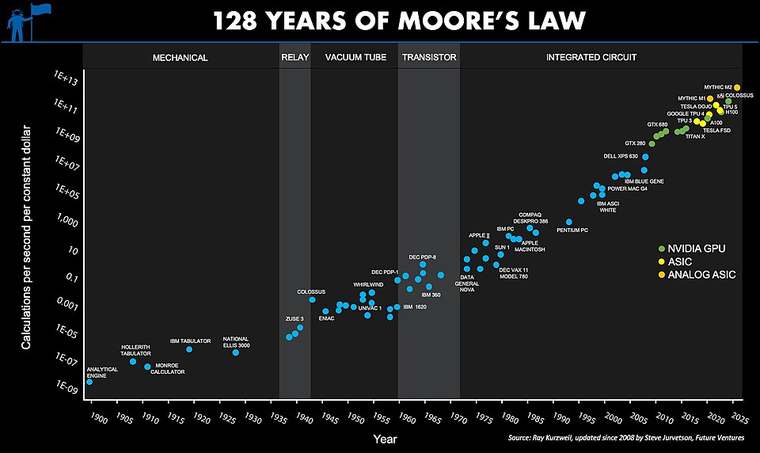 TechnologyMoore's Law predicted microchip transistor density would double every two yearsGordon Moore formulated the observation in 1965 to describe semiconductor technology growthHistoryLithography let printers work straight from drawingsAlois Senefelder's grease on limestone process spread art to cheap posters
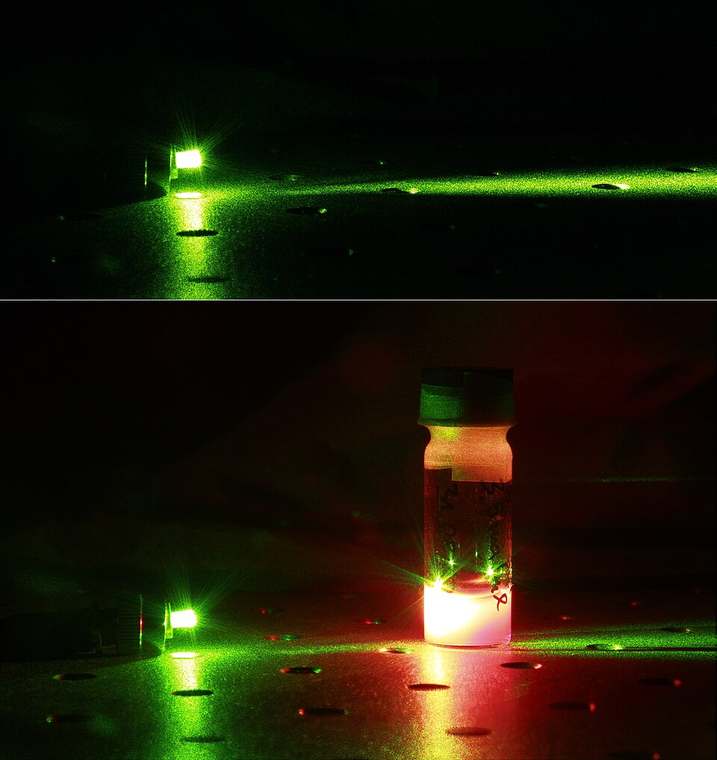 ScienceQuantum dots emit vivid colours determined purely by physical sizeNanometer sized semiconductor particles tune emission light wavelengths by particle radius
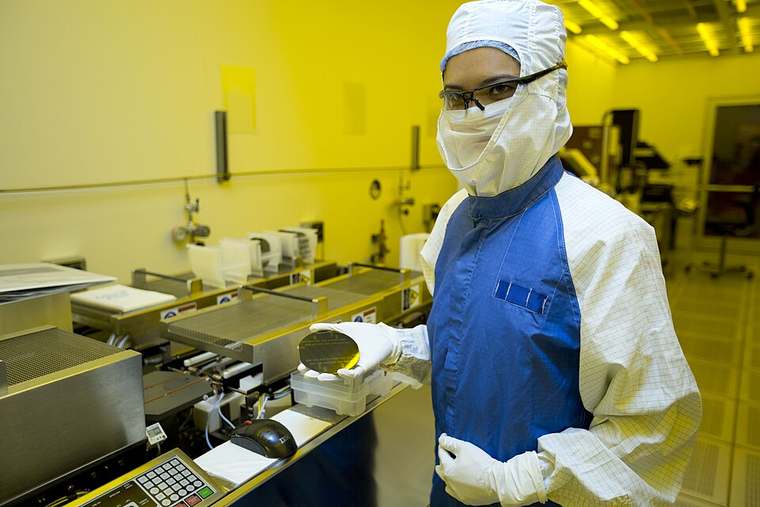 ScienceSemiconductors control electric current via bandgap energy levelsAn energy gap between valence and conduction bands enables modern digital electronicsTechnologyARM processors power billions of mobile phones due to low power consumptionAcorn RISC Machine architecture reduced instruction complexity to maximize energy efficiency
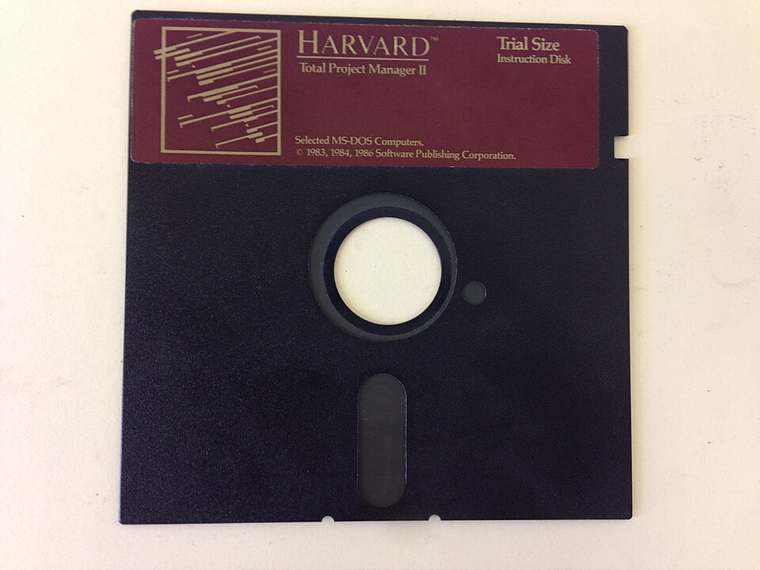 TechnologyThe floppy disk was created by IBM engineers led by Alan Shugart in 1967Flexible magnetic vinyl disks enclosed in plastic sleeves provided portable computer storage
← → to keep reading, or swipe
Tags: lithography, semiconductors, nanotechnology
Extreme ultraviolet lithography uses 13.5 nanometre light to print microchips: the short answers
- Where does this come from, and can I check it?
- EUV machines reflect invisible ultraviolet beams using precision mirrors in vacuum chambers. The figure is taken from NIST Physical Measurement Laboratory, which is linked in full on this page. Every fact on Mondo Knows names its source rather than repeating an unsourced claim.
- Is this really a technology fact?
- Yes. It sits on the Technology shelf, one of 2,600 sourced facts grouped into space, animals, the human body, history, science and more. Category pages collect every fact in the same field.
- What else can I read about it?
- The links under the fact point to a quiz, game, puzzle or calculator on the same subject, and the shelf below shows related facts. The wording here is original, and quoted phrases are marked as quotations.