Mondo Knows Facts
Undersea cables carry almost all intercontinental traffic
Around 99 percent of international data crosses oceans on glass fibre lying on the seabed, not by satellite Roughly 1.5 million kilometres of submarine cable are in service, each fibre carrying many wavelengths of light at once. A modern cable moves tens of terabits per second, far beyond any satellite constellation. Cable ships lay the repeaters and fibre in water up to about 8,000 metres deep, and bury shallow sections to protect them from anchors and trawler nets. It sits in Mondo's technology collection, one of 200 facts that each trace back to the reference below.
Where this comes from
International Cable Protection Committee
Facts that can change over time are reviewed and updated. If something here looks wrong, Mondo would rather know than be confidently incorrect.
Go further
More facts like this
 TechnologyFibre optic cables transmit data using pulses of laser lightTotal internal reflection inside glass strands carries gigabits of internet data per secondTechnologyNo internet link can beat the speed of lightLight in glass runs at about two thirds of its vacuum speed, setting a floor on any message crossing an oceanTechnologyRepairing a broken undersea cable takes weeksA cable ship must find the fault, hook the damaged section from the seabed and splice in fresh fibre on deck
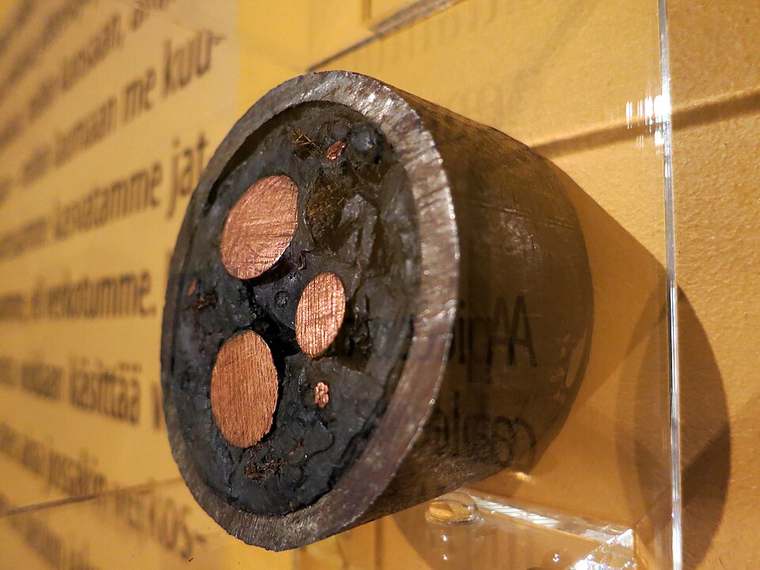 TechnologyThe first transatlantic telegraph cable was laid across the ocean floor in 1858Queen Victoria and President James Buchanan exchanged telegrams across the Atlantic OceanTechnologyOne mistyped route can take a country offlineNetworks trust each other's routing announcements, so a single wrong entry can redirect or swallow trafficTechnologyThe world ran out of IPv4 addresses in 2011The last five free blocks were handed to regional registries that February, forcing a move to 128-bit addressing
← → to keep reading, or swipe
Tags: cables, internet, fibre-optics
Undersea cables carry almost all intercontinental traffic: the short answers
- Where does this come from, and can I check it?
- Around 99 percent of international data crosses oceans on glass fibre lying on the seabed, not by satellite. The figure is taken from International Cable Protection Committee, which is linked in full on this page. Every fact on Mondo Knows names its source rather than repeating an unsourced claim.
- Is this really a technology fact?
- Yes. It sits on the Technology shelf, one of 2,600 sourced facts grouped into space, animals, the human body, history, science and more. Category pages collect every fact in the same field.
- What else can I read about it?
- The links under the fact point to a quiz, game, puzzle or calculator on the same subject, and the shelf below shows related facts. The wording here is original, and quoted phrases are marked as quotations.