Mondo Knows Facts
GPS clocks are corrected for relativity every day
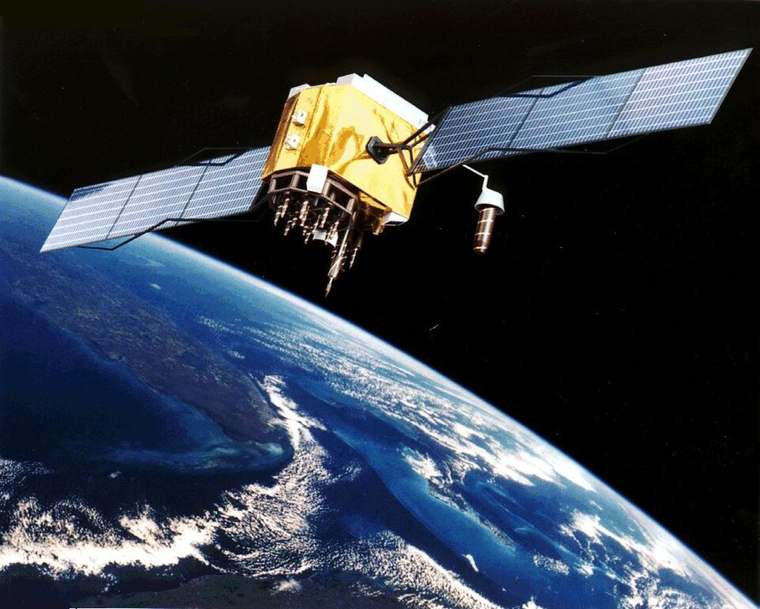
Satellite clocks gain about 38 microseconds daily and are tuned to compensate Global positioning satellites orbit at about 20,200 kilometres, where weaker gravity makes their clocks tick faster and their orbital speed makes them tick slower. The net effect is a gain of roughly 38 microseconds per day. Engineers offset the clock frequency before launch, since an uncorrected error would grow into kilometres of position error. It sits in Mondo's space collection, one of 200 facts that each trace back to the reference below.
Where this comes from
Facts that can change over time are reviewed and updated. If something here looks wrong, Mondo would rather know than be confidently incorrect.
Go further
More facts like this
 TechnologyGPS relies on a constellation of at least twenty-four active satellitesThe Global Positioning System calculates positions using atomic clock signals from medium Earth orbitTechnologyGPS accuracy improved overnight in May 2000The United States switched off deliberate signal degradation, cutting civilian error from about 100 metres to 20World GeographyTime zones follow politics more than the SunSeveral countries use offsets that sit far from their solar time, and some use half-hour stepsWorld GeographyChina keeps one clock across five time zonesOfficial time in Beijing applies from the eastern coast to Xinjiang, nearly 5,000 kilometres west
← → to keep reading, or swipe
Tags: gps, relativity, clocks
GPS clocks are corrected for relativity every day: the short answers
- Where does this come from, and can I check it?
- Satellite clocks gain about 38 microseconds daily and are tuned to compensate. The figure is taken from NASA Science, which is linked in full on this page. Every fact on Mondo Knows names its source rather than repeating an unsourced claim.
- Is this really a space fact?
- Yes. It sits on the Space shelf, one of 2,600 sourced facts grouped into space, animals, the human body, history, science and more. Category pages collect every fact in the same field.
- What else can I read about it?
- The links under the fact point to a quiz, game, puzzle or calculator on the same subject, and the shelf below shows related facts. The wording here is original, and quoted phrases are marked as quotations.