Mondo Knows Facts
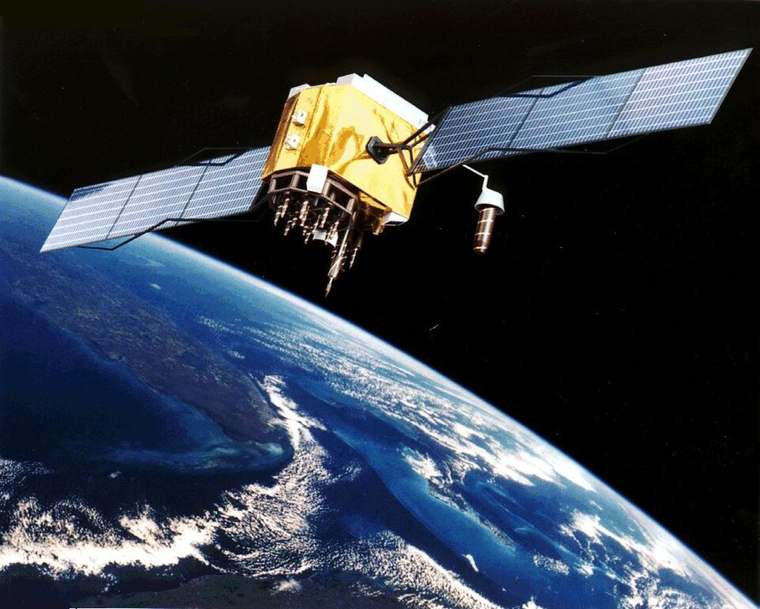
GPS clocks tick faster in orbit
Satellite clocks gain about 38 microseconds a day from weaker gravity and their orbital speed combined Special relativity slows a moving clock by about 7 microseconds a day, while weaker gravity higher up speeds it by about 45, leaving a net gain of 38. Left uncorrected, that would put the position fix out by around 10 kilometres within a day. Satellite clocks are set to run slightly slow on the ground so they keep time once in orbit. It sits in Mondo's technology collection, one of 200 facts that each trace back to the reference below.
Where this comes from
Facts that can change over time are reviewed and updated. If something here looks wrong, Mondo would rather know than be confidently incorrect.
Go further
More facts like this
 TechnologyGPS relies on a constellation of at least twenty-four active satellitesThe Global Positioning System calculates positions using atomic clock signals from medium Earth orbitTechnologyClocks are nudged to follow the spinning EarthSince 1972 the time signal has been stepped by a second now and then, because the planet does not keep perfect time
 TechnologyQuartz clocks keep time by measuring vibrations in a crystalWarren Marrison built the first quartz crystal clock at Bell Telephone Laboratories in 1927ScienceClocks run slower in stronger gravitational fieldsGeneral relativity proves that gravity curves spacetime and slows down the passage of time
← → to keep reading, or swipe
Tags: gps, relativity, clocks
GPS clocks tick faster in orbit: the short answers
- Where does this come from, and can I check it?
- Satellite clocks gain about 38 microseconds a day from weaker gravity and their orbital speed combined. The figure is taken from NASA, which is linked in full on this page. Every fact on Mondo Knows names its source rather than repeating an unsourced claim.
- Is this really a technology fact?
- Yes. It sits on the Technology shelf, one of 2,600 sourced facts grouped into space, animals, the human body, history, science and more. Category pages collect every fact in the same field.
- What else can I read about it?
- The links under the fact point to a quiz, game, puzzle or calculator on the same subject, and the shelf below shows related facts. The wording here is original, and quoted phrases are marked as quotations.