Mondo Knows Facts
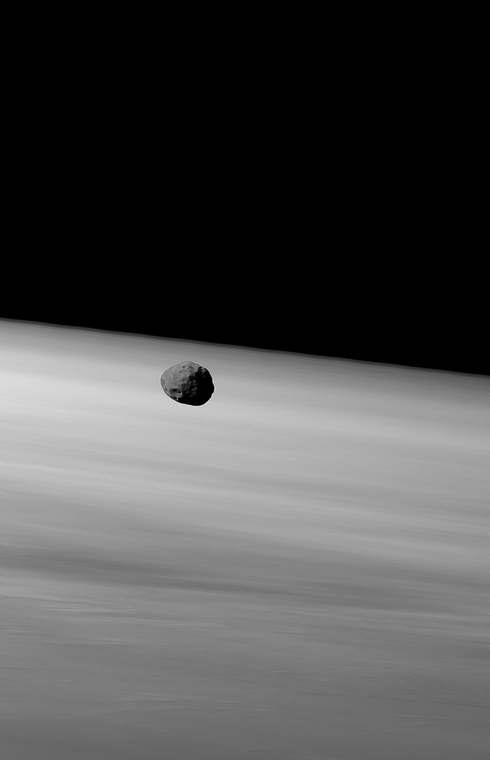
Mars has two tiny irregularly shaped moons named Phobos and Deimos
The dark cratered satellites resemble captured carbonaceous asteroids Mars is orbited by two small, dark moons named Phobos and Deimos, discovered in 1877 by Asaph Hall. Phobos measures just 22 kilometres across while Deimos is only 12 kilometres wide, leading astronomers to believe both are former asteroids captured by Martian gravity. It sits in Mondo's space collection, one of 200 facts that each trace back to the reference below.
Where this comes from
Facts that can change over time are reviewed and updated. If something here looks wrong, Mondo would rather know than be confidently incorrect.
Go further
More facts like this
 SpaceCuriosity rover sang Happy Birthday to itself on Mars in 2013Engineers programmed vibrating sample frequencies to hum the melodySpaceMariner 4 sent the first close-up pictures of MarsIts 1965 flyby showed a cratered surface and a thin atmosphereSpaceMars launch windows open about every 26 monthsSpacecraft wait for the planets to line up along an elliptical pathSpaceMartian dust storms can swallow the whole planetOccasionally haze engulfs Mars for weeks and cuts off solar powerSpaceMars polar caps grow and shrink every yearFrozen carbon dioxide condenses out of the air, changing the planet's pressureSpaceMars once had a global magnetic fieldRemanent magnetism in old crust shows it switched off billions of years ago
🪐 Spacefact 51 of 200
← → to keep reading, or swipe
Tags: mars, phobos, deimos
Mars has two tiny irregularly shaped moons named Phobos and Deimos: the short answers
- Where does this come from, and can I check it?
- The dark cratered satellites resemble captured carbonaceous asteroids. The figure is taken from NASA Science, which is linked in full on this page. Every fact on Mondo Knows names its source rather than repeating an unsourced claim.
- Is this really a space fact?
- Yes. It sits on the Space shelf, one of 2,600 sourced facts grouped into space, animals, the human body, history, science and more. Category pages collect every fact in the same field.
- What else can I read about it?
- The links under the fact point to a quiz, game, puzzle or calculator on the same subject, and the shelf below shows related facts. The wording here is original, and quoted phrases are marked as quotations.