Mondo Knows Facts
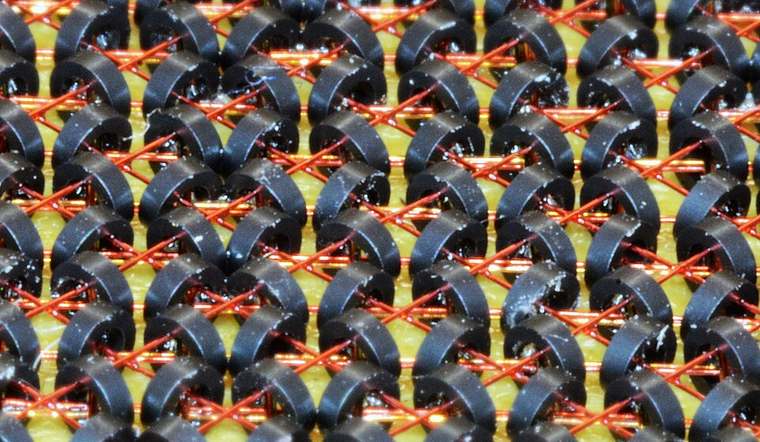
Magnetic core memory served as main RAM for computers from the 1950s to 1970s
Tiny ferrite rings threaded on wire grids stored magnetic bits non-volatilesly Invented independently by An Wang and Jay Forrester in the late 1940s, magnetic core memory used tiny ferrite ceramic rings woven onto copper wire matrices. Magnetising each core clockwise or anticlockwise stored binary ones or zeros. Core memory provided fast random-access memory that retained data even when system power was turned off. It sits in Mondo's technology collection, one of 200 facts that each trace back to the reference below.
Where this comes from
Facts that can change over time are reviewed and updated. If something here looks wrong, Mondo would rather know than be confidently incorrect.
Go further
More facts like this
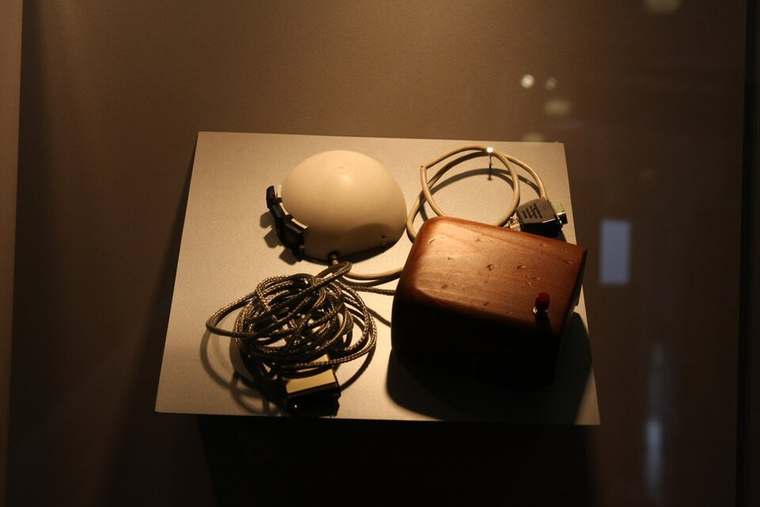 TechnologyThe first computer mouse was made of woodDouglas Engelbart invented the computer mouse in 1964 using a wooden shell and internal metal wheels
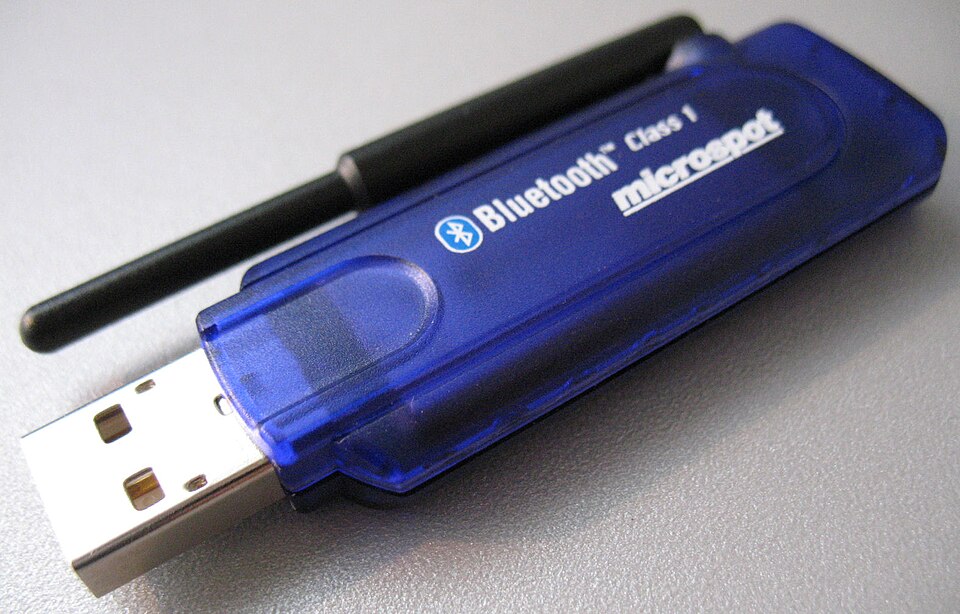 TechnologyUniversal Serial Bus USB standardized computer peripheral connections in 1996A consortium of tech companies created USB to replace mismatched serial and parallel portsTechnologyThe first stored program ran on the Manchester BabyIn June 1948 a small experimental machine executed 52 instructions held in a cathode ray tube memoryTechnologyVirtual memory first worked on the Atlas computerThe Manchester Atlas, running in 1962, gave programs an address space larger than the machine's real memoryTechnologyProcessors keep small caches to hide memory delaysA cache hit costs a few nanoseconds while main memory takes about a hundred, so chips copy nearby data firstTechnologyA cosmic ray can flip a bit in memoryAn energetic particle striking silicon can invert a stored value, an effect called a single event upset
← → to keep reading, or swipe
Tags: memory, core-memory, hardware
Magnetic core memory served as main RAM for computers from the 1950s to 1970s: the short answers
- Where does this come from, and can I check it?
- Tiny ferrite rings threaded on wire grids stored magnetic bits non-volatilesly. The figure is taken from Computer History Museum, which is linked in full on this page. Every fact on Mondo Knows names its source rather than repeating an unsourced claim.
- Is this really a technology fact?
- Yes. It sits on the Technology shelf, one of 2,600 sourced facts grouped into space, animals, the human body, history, science and more. Category pages collect every fact in the same field.
- What else can I read about it?
- The links under the fact point to a quiz, game, puzzle or calculator on the same subject, and the shelf below shows related facts. The wording here is original, and quoted phrases are marked as quotations.