Mondo Knows Facts
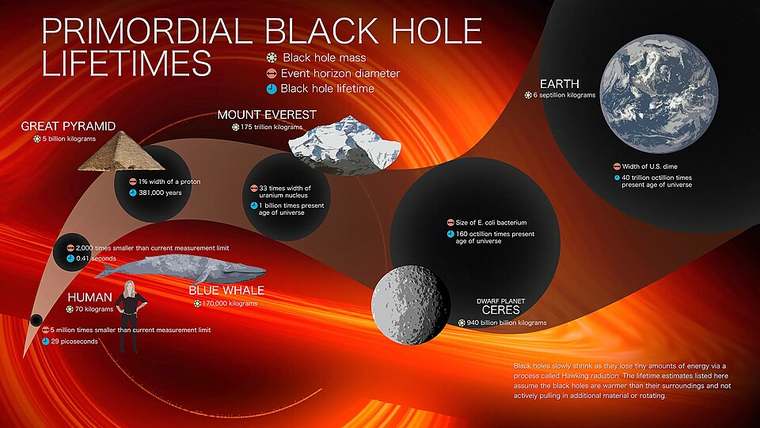
Black holes slowly evaporate over time via Hawking radiation
Quantum effects near the event horizon cause black holes to lose mass In 1974, physicist Stephen Hawking calculated that quantum vacuum fluctuations near a black hole's event horizon generate particle-antiparticle pairs. One particle falls in while the other escapes, causing the black hole to steadily emit thermal energy and lose mass until it eventually evaporates. It sits in Mondo's space collection, one of 200 facts that each trace back to the reference below.
Where this comes from
Facts that can change over time are reviewed and updated. If something here looks wrong, Mondo would rather know than be confidently incorrect.
Go further
More facts like this
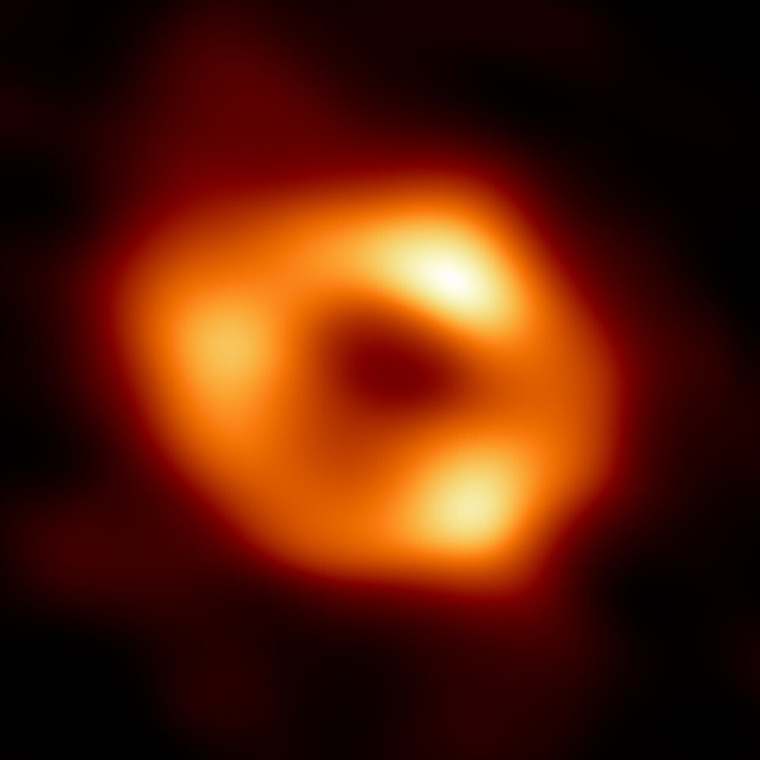 SpaceThe Event Horizon Telescope captured the first direct image of a black holeA global network of radio telescopes imaged the supermassive black hole in M87SpaceObjects entering a black hole undergo spaghettificationExtreme gravitational gradients stretch falling matter into long thin strings
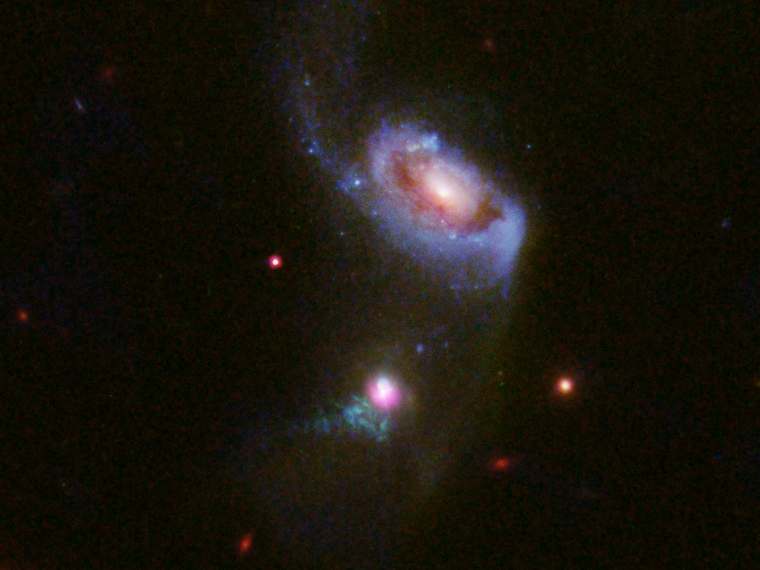 SpaceA supermassive black hole sits at the centre of the Milky WaySagittarius A star contains four million times the mass of our SunSpaceMost of a rocket is the fuel to lift the fuelThe rocket equation ties speed to the ratio of full to empty massSpaceOrbiting low means moving fastAt 400 kilometres altitude a satellite needs nearly 8 kilometres a secondSpaceThere are five gravitational parking spots near EarthAt L4 and L5 a spacecraft can hold a stable position with minimal fuel
🪐 Spacefact 45 of 200
← → to keep reading, or swipe
Tags: hawking radiation, black hole, physics
Black holes slowly evaporate over time via Hawking radiation: the short answers
- Where does this come from, and can I check it?
- Quantum effects near the event horizon cause black holes to lose mass. The figure is taken from Encyclopaedia Britannica, which is linked in full on this page. Every fact on Mondo Knows names its source rather than repeating an unsourced claim.
- Is this really a space fact?
- Yes. It sits on the Space shelf, one of 2,600 sourced facts grouped into space, animals, the human body, history, science and more. Category pages collect every fact in the same field.
- What else can I read about it?
- The links under the fact point to a quiz, game, puzzle or calculator on the same subject, and the shelf below shows related facts. The wording here is original, and quoted phrases are marked as quotations.