Mondo Knows Facts
Leavitt found a yardstick in Cepheid stars
The slower a Cepheid pulses, the more light it truly gives out Henrietta Swan Leavitt spotted the relation around 1908 while cataloguing variable stars in the Magellanic Clouds, where all the stars lie at similar distance. Because apparent brightness then reflected true brightness, a Cepheid's pulse rate revealed its luminosity. Hubble used the rule to show that Andromeda lies far beyond the Milky Way. It sits in Mondo's space collection, one of 200 facts that each trace back to the reference below.
Where this comes from
Facts that can change over time are reviewed and updated. If something here looks wrong, Mondo would rather know than be confidently incorrect.
Go further
More facts like this
SpaceType Ia supernovae make reliable cosmic rulersThese explosions peak at a similar brightness, so their distance can be read offSpaceA parsec comes from a tiny parallax angleOne arcsecond of apparent shift equals 3.26 light years of distanceSpaceA light-year is a measure of distance rather than timeOne light-year equals roughly 9.46 trillion kilometres travelled by light in a year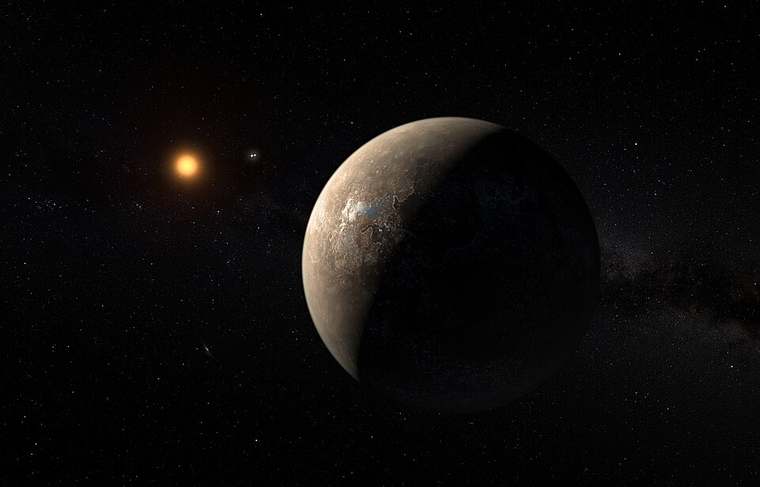 SpaceProxima Centauri is the closest star to our solar systemThe red dwarf star sits roughly four point two light-years away from EarthWorld GeographyNorway's coastline is longer than its land bordersMeasured around every fjord, Norway's mainland shore runs roughly 29,000 kilometresRecords & ExtremesArctic terns make the longest migration of any animalTagged birds flew nearly 90,000 kilometres in one annual round trip
🪐 Spacefact 136 of 200
← → to keep reading, or swipe
Tags: cepheid, distance, leavitt
Leavitt found a yardstick in Cepheid stars: the short answers
- Where does this come from, and can I check it?
- The slower a Cepheid pulses, the more light it truly gives out. The figure is taken from NASA Science, which is linked in full on this page. Every fact on Mondo Knows names its source rather than repeating an unsourced claim.
- Is this really a space fact?
- Yes. It sits on the Space shelf, one of 2,600 sourced facts grouped into space, animals, the human body, history, science and more. Category pages collect every fact in the same field.
- What else can I read about it?
- The links under the fact point to a quiz, game, puzzle or calculator on the same subject, and the shelf below shows related facts. The wording here is original, and quoted phrases are marked as quotations.